2026 Automation Trends: Why Miniaturized Electronics Require an Automatic Dipping Machine
As we look toward 2026, the global electronics manufacturing industry is standing at a critical crossroads. Driven by the rapid expansion of 5G Advanced (and early 6G research), edge computing, autonomous vehicles, and next-generation consumer wearable devices, the market demands electronic components that are incredibly small, highly reliable, and produced at an unprecedented scale.
As industry experts in manufacturing automation, we consistently hear the same pressing concerns from procurement managers, production engineers, and factory owners: How can we drastically increase production capacity while maintaining high yield rates on components that are shrinking to microscopic sizes?
The answer lies in the strategic upgrade of manufacturing equipment. Specifically, adopting a highly precise automatic dipping machine is no longer just an optional operational enhancement; it has become a fundamental necessity for survival and competitiveness in the upcoming electronic automation landscape. In this article, we will explore the core automation trends of 2026 and detail why upgrading your termination process is the key to unlocking future growth.
The Core Pain Points in Electronics Manufacturing for 2026
To understand the automation trends shaping the future, we must first examine the specific pain points driving the telecommunications and consumer electronics sectors today. Procurement and operational teams are currently caught between two conflicting demands: smaller sizes and higher volumes.
The Relentless Push for Extreme Component Miniaturization
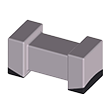
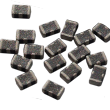
Modern consumer electronics and advanced communication infrastructure require passive components—such as Multi-Layer Ceramic Capacitors (MLCCs), chip resistors, and tiny inductors—that defy traditional manufacturing limits. The industry has aggressively shifted toward 0201, 01005, and even the ultra-microscopic 008006 component sizes.
For production managers, miniaturization creates massive technical hurdles in the termination process. Applying conductive paste (such as silver or epoxy paste) to the ends of these microscopic components requires micron-level accuracy. Traditional or semi-automatic methods often lead to uneven coating, or short circuits. These defects instantly destroy yield rates and inflate manufacturing costs.
Scaling High-Capacity Production Without Sacrificing Quality
Alongside extreme miniaturization, the global demand for passive electronic components is measured in the trillions of units annually. Procurement professionals are under strict mandates from top-tier electronics brands to secure suppliers who can guarantee short lead times, massive volume scalability, and zero-defect quality.
When manual labor or outdated batch machinery is involved, attempting to scale production linearly increases the risk of human error and dramatically inflates labor costs. Factory owners urgently need automation solutions that offer high-speed, continuous, and stable throughput to remain competitive in tightening global supply chains.
How an Automatic Dipping Machine Solves the Miniaturization Dilemma
An automatic dipping machine is a highly specialized piece of industrial equipment designed to automate the precise application of conductive termination paste to the ends of electronic components. In the context of 2026 automation trends, these machines leverage advanced robotics and continuous carrier systems to solve the industry's most pressing challenges.
Here is how modern automated dipping technology directly addresses production bottlenecks:
- Micron-Level Precision Control: The core advantage of an advanced automatic dipping machine is its absolute control over the dipping depth and paste leveling. When dealing with 01005 components, an error of a few micrometers can render a batch defective. Automated systems utilize precision servo motors to ensure every single component on the carrier dips into the paste at the exact same depth, creating perfectly uniform electrical terminations.
- Maximizing High-Volume Throughput: Unlike older batch-and-wait processes, modern automatic dipping lines are designed for continuous, high-speed operations. By integrating automated loading, precise dipping, blotting, and unloading mechanisms into a seamless workflow, manufacturers can process a massive amount of miniature components per minute.
- Significant Reduction in Material Waste: Conductive pastes made of precious metals are exceedingly expensive. One of the primary financial concerns for procurement officers is raw material waste. Advanced dipping automation features precision scraper systems that maintain an ultra-even paste surface, preventing over-dipping and drastically reducing the consumption of costly conductive pastes.
Comparative Analysis: Traditional Dipping vs. Precision Automatic Dipping
To clearly illustrate the Return on Investment (ROI) and operational benefits for factory owners and procurement teams, we have compiled a structural comparison between legacy dipping methods and modern automated solutions.
The table below highlights the critical manufacturing metrics that influence both daily operations and long-term business profitability.
| Manufacturing Metric | Traditional / Semi-Auto Dipping Methods | Modern Automatic Dipping Machine | Business Impact & ROI for 2026 |
| Precision & Depth Control | Low to Medium; highly reliant on operator skill and environmental factors. | Extremely High; driven by precision servo motors and advanced leveling. | Ensures uniform termination on small components, crucial for modern smart devices. |
| Production Capacity | Limited by manual loading speeds and batch handling delays. | Ultra-High; continuous automated carrier flow designed for mass production. | Meets the massive, rapid-delivery volume demands of the telecommunications and 5G/6G sectors. |
| Material Waste (Paste) | High; uneven dipping and inconsistent leveling waste expensive conductive paste. | Minimal; precision depth control and continuous scraping limit excess paste usage. | Direct and immediate reduction in raw material costs, significantly improving overall profit margins. |
| Yield Rate & Defects | Inconsistent; highly prone to missing coating, and bridging. | Consistently > 99%; standardized mechanical movements eliminate human error. | Eliminates costly rework, reduces scrap rates, and enhances the manufacturer's reputation. |
| Labor Dependency | Requires multiple skilled operators per shift to monitor and adjust. | Requires minimal supervision; a single operator can oversee multiple machines. | Solves ongoing labor shortage issues and fundamentally lowers long-term operational costs. |
As the data above demonstrates, transitioning to an automated dipping system is not merely an equipment purchase; it is a strategic maneuver to lower unit costs while simultaneously elevating product quality to meet 2026 industry standards.
Key Automation Trends Shaping the Electronic Component Industry
As AI and smart technologies continue to revolutionize the manufacturing sector, dipping equipment must evolve. By 2026, we expect to see the following trends dominate the market:
Integration with Smart Factory (Industry 4.0) Ecosystems
Future-proof automatic dipping machines are no longer isolated islands of production. They are equipped with advanced PLC controls, touch-screen HMIs, and data-output capabilities. This allows plant managers to monitor production variables—such as cycle times, machine downtime, and output rates—in real time. This data can be fed into AI predictive maintenance systems to prevent breakdowns before they occur.
Adaptability for Diverse Component Geometries
While MLCCs and chip resistors dominate the volume, the rise of specialized telecommunications hardware requires components with unique geometries. Modern automation trends demand dipping machines that feature adjustable carrier jigs and flexible parameter settings, allowing factory owners to switch production lines rapidly without weeks of re-tooling.
Frequently Asked Questions (FAQs) About Automatic Dipping Machines
To assist procurement teams, researchers, and engineers in making informed decisions, we have compiled answers to the most common queries regarding automated dipping technology.
Q1: What is an automatic dipping machine used for in electronics manufacturing?
A1: An automatic dipping machine is utilized in the passive component industry to apply conductive termination paste (such as silver or copper paste) to the ends of miniature electronic components like MLCCs, chip resistors, and inductors. It automates the entire process to ensure highly uniform electrical connections.
Q2: How does an automatic dipping machine improve production yield rates?
A2: It improves yield rates by replacing inconsistent human variables with high-precision servo controls. By ensuring exact dipping depth and maintaining a perfectly level paste surface, the machine prevents common defects like uneven dipping or short circuits, thereby pushing yield rates close to perfection.
Q3: How does upgrading to this machine impact raw material costs?
A3: Precious metal conductive pastes are a major expense in component manufacturing. Automated machines use precision paste leveling and scraping mechanisms that ensure only the exact required amount of paste adheres to the component, drastically reducing paste waste and lowering overall raw material costs.
Q4: Why is upgrading to automated dipping considered critical for the 2026 market?
A4: By 2026, the demand for high-density components for 5G/6G, AI hardware, and electric vehicles will outpace traditional manufacturing capabilities. Upgrading is critical because OEMs will only source from suppliers who can guarantee immense production capacity, microscopic precision, and fast lead times—metrics that can only be achieved through advanced automation.
Prepare Your Production Line for 2026 with LONG Automatic Machinery
As the electronics manufacturing landscape rapidly evolves towards extreme miniaturization and massive scale, relying on outdated machinery is a risk no competitive business can afford. Addressing the pain points of yield inconsistency, labor shortages, and material waste requires a proven, high-performance solution.
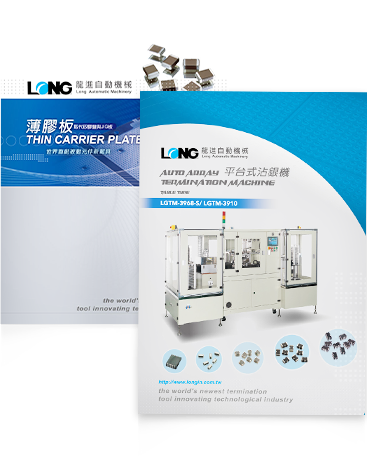
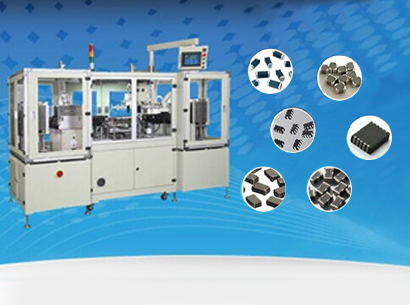
We at LONG Automatic Machinery Co., Ltd. have dedicated our expertise to solving these exact challenges for the global electronic component industry. Our flagship equipment, such as the automatic dipping machine (TCP-Autoline-LGTM-6837), is meticulously engineered to deliver the micron-level precision and continuous high-speed throughput required by top-tier manufacturers. Featuring advanced servo-driven depth control, automated alignment, and minimal paste waste mechanisms, our solutions empower factory owners to scale capacity while securing near-perfect yield rates on even the smallest components.
__%E6%9C%80%E7%B5%82%E7%89%88_(%E5%B0%8F%E5%9C%96).png)
Don't let legacy equipment bottleneck your future growth. If your procurement or engineering team is looking to future-proof your production lines for the demands of 2026 and beyond, Contact LONG Automatic Machinery today. Let our experts help you configure the perfect automation solution to elevate your manufacturing capabilities.