How Precision Dipping Improves Reliability in Automotive, Medical, and Military Electronics
Why dipping is a critical process in high-reliability electronics
In automotive, medical, and defense-related electronics, even minor process variation can become a major reliability risk.
Although passive components are small, their termination quality directly affects solderability, electrical consistency, long-term stability, and overall product safety. If dipping thickness is inconsistent, if air bubbles remain in the paste, if contamination is introduced during handling, or if drying temperatures are unstable, the result is not only lower yield. It can also lead to qualification delays, rework costs, field-performance concerns, and reduced customer confidence.
For this reason, precision dipping is not a secondary production step. It is a process that helps determine whether components can perform reliably in automotive electronics, implantable and wearable medical devices, imaging systems, military radios, radar systems, and guidance or control applications.
For manufacturers serving these sectors, the key question is no longer simply whether a machine can dip. The real question is whether the process can remain stable, repeatable, clean, and controllable in production.
What buyers and manufacturers need from a high-reliability dipping process
In high-reliability markets, purchasing teams, plant managers, and engineering leaders often evaluate dipping solutions around four key requirements:
1. Process repeatability
Automotive and medical electronics require stable results from batch to batch. Consistent dipping depth, controlled paste behavior, and accurate transfer are essential for predictable quality.
2. Low contamination risk
Medical and defense-related applications require tight control over cleanliness. Excessive manual handling can increase the risk of particles, misalignment, and process inconsistency.
3. Bubble reduction and coating integrity
Voids or trapped air can affect paste integrity and termination quality. In sensitive electronic applications, that is a serious risk.
4. Thermal stability during drying
Drying and curing conditions must be carefully controlled. If thermal performance is unstable, final termination quality and downstream assembly consistency may be affected.
In practical terms, buyers are not only selecting equipment. They are selecting a process capability that can reduce manufacturing risk.
Why an automatic dipping machine matters more in regulated and mission-critical applications
Manual or semi-automatic dipping may still be sufficient in lower-risk production environments. However, when the target market includes automotive, medical, aerospace, or defense supply chains, the required level of process control is much higher.
An automatic dipping machine helps standardize key steps such as loading, transport, dipping, debubbling, drying, transfer, and unloading. This reduces operator-dependent variation and helps improve production consistency. For manufacturers facing customer audits, qualification requirements, or strict internal quality standards, that level of control is increasingly important.
A full automatic dipping machine offers further advantages when the goal is to minimize human contact, improve long-run repeatability, and support scalable manufacturing quality. With robotic transport, parameter-based motion control, and integrated cleaning or inspection mechanisms, manufacturers are better positioned to maintain a stable high-reliability process.
In high-reliability sectors, success is not measured by one acceptable sample. It is measured by whether the process remains dependable over time.
How precision dipping supports reliability in automotive and medical electronics
When evaluating dipping equipment for high-reliability components, the following criteria are especially important:
| Key process requirement | Why it matters in automotive and medical electronics | What buyers should look for |
| Uniform dipping | Supports stable electrical and assembly performance | High plane precision and stable dipping control |
| Reduced manual contact | Helps lower contamination and handling error | Automated loading, transport, and unloading |
| Debubble capability | Improves coating integrity and termination quality | Vacuum debubble function |
| Surface cleanliness | Reduces debris-related defects | Debris check mechanisms |
| Thermal stability | Supports consistent drying and final quality | Reliable heating and drying system |
| High-volume repeatability | Improves yield, output consistency, and cost control | Integrated transport and parameter-controlled operation |
This comparison also highlights an important point for procurement teams: machine features should not be evaluated in isolation. They should be evaluated according to the specific failure risks they help reduce.
Market trends are increasing the importance of precision dipping
Several industry developments are making process control more important than ever:
Electronics are expanding into more critical applications
Automotive systems, portable medical devices, imaging equipment, aerospace electronics, and defense systems all continue to grow in complexity. As a result, the reliability expectations placed on passive components are increasing.
Miniaturization reduces process tolerance
As components become smaller and more performance-sensitive, acceptable process windows become narrower. Small differences in paste amount, alignment, or contamination can create larger downstream problems.
Buyers increasingly prioritize risk reduction over initial equipment cost
OEMs and tier suppliers are under growing pressure to improve supply chain reliability. This has shifted attention away from machine price alone and toward process stability, repeatability, and qualification readiness.
As a result, the market is shifting from asking which machine is cheapest to asking which process is most capable of supporting reliable production.
How LONG Automatic Machinery addresses high-reliability production needs
LONG Automatic Machinery understands that manufacturers in medical, military, and other high-reliability sectors need more than basic automation. They need a dipping solution designed to reduce variation at every critical step.
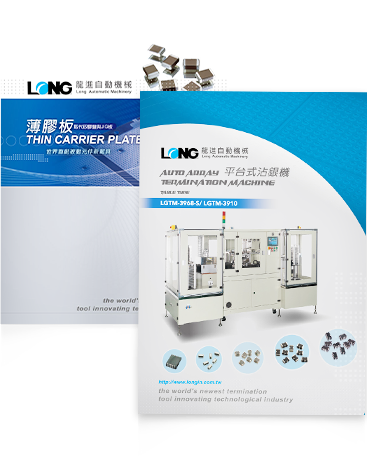
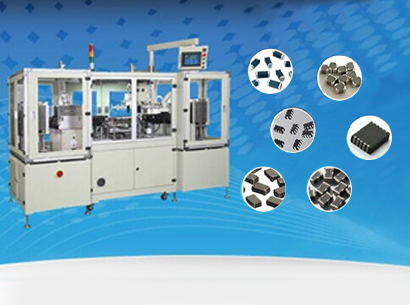
Based on the information published on the LONG website, the LGTM-6837 TCP Full Automatic Single Side Dipping Machine is designed to complete the process from loading to unloading automatically. The workflow includes automatic shaking, bottom-up servo pressing, low-temperature preheating, dipping, vacuum debubble, drying, transfer, and unloading. Transport throughout the machine is handled by robotic and transport mechanisms to reduce direct operator contact and human error.
From a high-reliability manufacturing perspective, several design features are especially relevant:
Reduced manual handling
Automated transfer helps lower contamination risk and process inconsistency caused by human contact.
Cleaning and debris control
Sticky roller, chip surface cleansing, and debris check mechanisms help improve cleanliness before dipping.
Controlled pressing and dipping
Servo-based motion control and a strengthened diphead mechanism help support stable dipping precision and repeatability.
Vacuum debubble capability
For applications requiring consistent termination quality, vacuum debubbling helps improve coating integrity after dipping.
Stable thermal support
Low-temperature preheating and high-temperature oven design help maintain stable drying conditions and final quality.
These capabilities align closely with the applications highlighted on the LONG website, including implantable and wearable health monitors, MRI and CT imaging equipment, military radios, radar systems, and guidance or control systems.
FAQ: Precision dipping for high-reliability electronics
1. Why is dipping consistency important in automotive and medical electronics?
Because dipping consistency affects solderability, termination quality, and long-term reliability. In regulated or mission-critical applications, even small process variation can create significant qualification and product-performance risk.
2. What is the advantage of an automatic dipping machine over manual processing?
An automatic dipping machine helps reduce operator-related variation, improve production consistency, and support stable output in environments with tighter quality expectations.
3. When should manufacturers consider a full automatic dipping machine?
A full automatic dipping machine is especially valuable when manufacturers need to reduce manual contact, improve long-run repeatability, lower human error, and support more stable high-reliability production.
4. Why is vacuum debubbling important in the dipping process?
Vacuum debubbling helps remove trapped air after dipping. This improves paste integrity and supports better termination quality, especially in sensitive applications.
5. Which industries most often require high-reliability dipping solutions?
Typical examples include automotive electronics, implantable and wearable medical devices, imaging systems, military communications, radar systems, aerospace electronics, and guidance or control applications.
6. What should procurement teams compare when evaluating dipping equipment?
The most important factors usually include repeatability, contamination control, debubble capability, thermal stability, automation level, maintenance practicality, and suitability for qualification and mass production needs.
What buyers should review before choosing a dipping solution
When evaluating dipping equipment for high-reliability electronics, it is important to go beyond brochure claims. Buyers should examine how the machine reduces contamination risk, how it manages bubbles, how stable its thermal process is, how much manual handling it removes, and whether it can maintain consistent output over long production runs.
This is where LONG Automatic Machinery offers clear value. LONG focuses on dipping solutions for passive components and provides equipment including full automatic dipping machine models as well as application-focused solutions for medical and military electronics. For further review, you can explore the TCP Full Automatic Single Side Dipping Machine and the Medical & Military Electronics application page.
Conclusion
For automotive, medical, and other high-reliability electronics, precision dipping is not a secondary process. It is a core part of quality assurance, reliability control, and production confidence. The right automatic dipping machine helps reduce variation. The right full automatic dipping machine helps manufacturers further improve repeatability, cleanliness, and process stability to meet the expectations of demanding markets.
For companies planning a new production line, upgrading an existing process, or evaluating a more reliable dipping solution for sensitive electronic applications, contact LONG Automatic Machinery for further discussion.