Technical Advantages of TCP Thin Carrier Plates for MLCC, Chip Resistor, and Chip Inductor Manufacturing
In passive component manufacturing, stable processing depends on more than equipment settings alone. During termination, the carrier plate used to support components can directly affect positioning accuracy, process consistency, equipment stability, and long-term production efficiency.
For manufacturers of multilayer ceramic capacitors (MLCCs), chip resistors, chip inductors, and other passive components, even small variations in carrier plate flatness, dimensional tolerance, material rigidity, or surface condition may create downstream issues. These can include uneven silver dipping, inconsistent coating results, unstable termination quality, transfer errors, lower yield, and increased maintenance requirements.
A TCP (Thin Carrier Plate) is not simply a tool for holding components. It is a critical interface between the workpiece, automation equipment, and the manufacturing process. This article explains the technical advantages of TCP, the material and specification factors that buyers, engineers, and production teams should evaluate.
Why TCP (Thin Carrier Plate) Matter in Passive Component Manufacturing
Passive components are typically produced in high volumes and require stable, repeatable processes. During termination and automated handling, components must remain consistently positioned throughout repeated production cycles.
If a carrier plate lacks sufficient flatness or dimensional stability, component height may vary. This can affect dipping depth, coverage, and terminal shapes.
For manufacturers, selecting a carrier plate is not only about meeting a basic drawing specification. It is about supporting stable process conditions, reducing variation, minimizing downtime, and maintaining long-term production reliability.
.png)
Core Technical Advantages of TCP (Thin Carrier Plate)
1. Dimensional Stability Supports Accurate Positioning
Dimensional stability is important when components pass repeatedly through automated termination processes. Even minor deformation can affect positioning accuracy, transfer stability, and production consistency.
A well-designed TCP should maintain stable dimensions during repeated handling, continuous operation, and long production cycles. This is particularly important for:
- MLCC manufacturing
- Chip resistor manufacturing
- Chip inductor manufacturing
- Automated loading and unloading systems
- Termination processes
- High-volume passive component production
Stable dimensions help reduce position drift and support reliable automation performance.
2. Good Flatness Improves Process Consistency
Flatness directly affects how consistently components sit in the carrier plate hole. When the surface is uneven, component position and contact condition may vary across the plate.
In termination processes, this may lead to inconsistent dipping depth, uneven paste coverage, or variation in terminal quality. For this reason, flatness should be considered a process-critical specification rather than only a geometric requirement.
Good carrier plate flatness helps support:
- Consistent component placement
- Uniform dipping conditions
- More consistent termination results
- Reliable automated handling
- Lower batch-to-batch variation
Material Factors That Affect Production Performance
When evaluating a TCP, buyers should consider more than unit price and basic dimensions. Material properties directly influence process reliability, service life, maintenance frequency, and total production cost.
TCP thin carrier plates are exposed to repeated loading, unloading, and handling with automation equipment. Insufficient wear resistance can reduce positioning accuracy over time and increase replacement frequency.
A durable carrier material helps extend service life and reduce maintenance-related downtime.
Key Specifications to Evaluate
| Specification Factor | Why It Matters | Risk If Poorly Controlled |
| Flatness | Supports consistent component placement and contact conditions | Uneven dipping termination |
| Thickness consistency | Supports stable handling and automation repeatability | Position drift and transfer instability |
| Dimensional tolerance | Ensures fit with fixtures and automation equipment | Jamming, misalignment, and reduced efficiency |
| Material rigidity | Maintains structural stability during repeated use | Warping, deformation, and handling problems |
| Wear resistance | Affects service life and maintenance requirements | Frequent replacement and more downtime |
For procurement teams, these are not only technical specifications. They are also important indicators of total cost of ownership, production stability, maintenance requirements, and supply risk.
Key Applications in Passive Component Manufacturing
Termination Processes
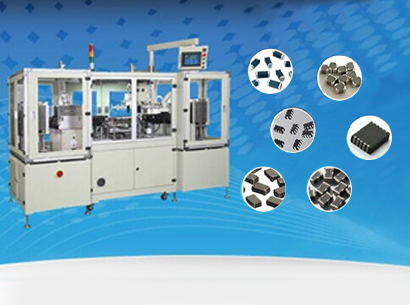
Termination processing requires precise, stable component positioning and controlled dipping conditions to support consistent terminal formation, product quality and uniformity. A TCP thin carrier plate with reliable flatness and dimensional stability helps reduce variation caused by movement, and can help support more consistent dipping results across repeated production cycles.
Automated Loading, Unloading, and Transfer
MLCCs, chip resistors, and chip inductors are commonly manufactured in high volumes. Automated handling systems must operate reliably throughout the production line.
TCP thin carrier plates need to integrate smoothly with loading, unloading, and transfer equipment. Suitable flatness, tolerance control, material rigidity, and durability can help reduce positioning errors, manual intervention, and unplanned line stoppage.
How to Evaluate a TCP Thin Carrier Plate Supplier
When selecting a supplier, procurement teams and production engineers should consider the following points.
Does the Supplier Understand Passive Component Processes?
A capable supplier should understand how flatness, material selection, thickness, and tolerance control influence termination, and automated handling performance.
Can the Supplier Match Specifications to the Application?
Different component types, equipment configurations, process conditions may require different carrier specifications. Application-based specification matching helps reduce long-term production risk.
Can the Supplier Support Long-Term Production Stability?
The value of a carrier plate should be evaluated over its service life, not only by its initial purchase price. Repeatability, durability, maintenance requirements, and process compatibility all affect long-term value.
FAQ About TCP Thin Carrier Plates
Q1: What is a TCP thin carrier plate?
A TCP thin carrier plate is a precision carrier used to support component positioning, transfer, termination, and related automated processes.
Q2: Which components can use TCP thin carrier plates?
TCP thin carrier plates are used in the production of MLCCs, chip resistors, chip inductors, and other passive components.
Q3: Why is flatness important?
Flatness affects component position, contact condition, and process consistency. Poor flatness may lead to uneven silver dipping, coating variation, unstable automated handling, and inconsistent termination quality.
Q4: How can buyers reduce sourcing risk?
Buyers should evaluate flatness, dimensional tolerance, thickness consistency, material durability, and the supplier's understanding of the actual application.
Q5: Why consider LONG Automatic Machinery?
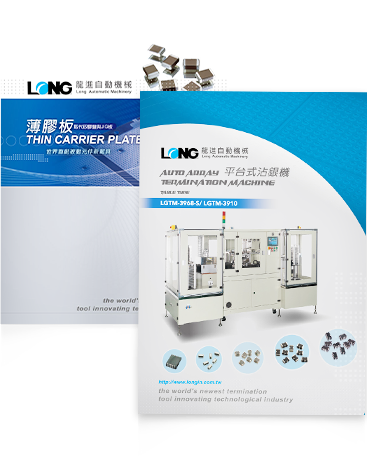
LONG Automatic Machinery focuses on equipment and process applications for passive component manufacturing, including termination, and automated handling. As the inventor of TCP thin carrier plate technology, LONG also holds related patents and provides application-oriented support based on production requirements.
Conclusion
In MLCC, chip resistor, chip inductor, and other passive component manufacturing, a TCP thin carrier plate can directly influence the stability of termination and automation processes.
Flatness, dimensional control, material rigidity, and wear resistance are not secondary details. They can affect process consistency, yield, equipment reliability, maintenance frequency, and long-term operating cost.
LONG Automatic Machinery has long focused on passive component manufacturing equipment and related process applications. With experience in TCP thin carrier plate development and related patent technology, LONG can support customers in evaluating suitable carrier specifications for termination and automation requirements.
Explore LONG's TCP Thin Carrier Plate Solutions
If you are evaluating a TCP Thin Carrier Plate solution for MLCC, chip resistor, chip inductor, or other passive component applications, contact LONG Automatic Machinery to discuss your production requirements.