JIG Plate

What Is JIG Plate?
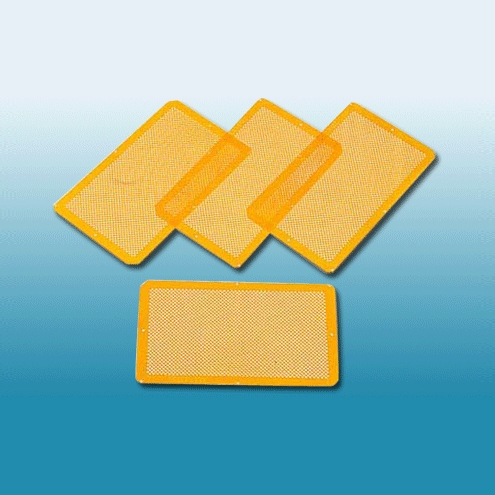
JIG Plate is a carrier for positioning and holding chip components during termination processes. It helps keep chips in an organized layout through loading, tape application, dipping, transferring, and unloading operations.
This product is a fiberglass JIG plate based on a fiberglass board and silicone tape system. Fiberglass construction is lightweight and thin, making it suitable for production environments that require manual handling, or lower initial investment.
The standard JIG Plate size is 280 × 180 mm. If your chip dimensions, hole layout, carrier size, or existing equipment are different, LONG can evaluate a custom solution based on your technical information.
JIG Plate Specifications and Customization
| Product No | Name | Specification |
|---|---|---|
| JP1M4- | JIG Plate, 280*180mm |
If the standard JIG Plate does not match your chip dimensions, or equipment requirements, LONG can evaluate a custom option. Complete technical information helps speed up the specification-review process.
Information Recommended for a Custom JIG Plate Inquiry
- Chip drawing, length, width, thickness, and dimensional tolerances
- Chip material and product model
- Required carrier dimensions
- Existing JIG Plate or equipment photos, if available
- Expected order quantity, delivery schedule, and destination
- Whether JIG tape, cassettes, or related equipment are also required
When Is JIG Plate a Suitable Choice?
-
Small-Batch Production and Pilot Projects
For factories introducing a new product, running pilot production, or manufacturing small batches, a JIG Plate can offer a lower-initial-investment chip-holding option. Manufacturers can establish a suitable operating method based on actual chip and process requirements before considering other carrier systems.
-
Production Lines That Frequently Change Specifications
When a production line needs to change chip dimensions, hole layouts, or product specifications frequently, a JIG Plate system can provide greater adjustment flexibility. This can be useful for high-mix, low-volume production and frequent product-development work.
-
Lightweight Construction and Easier Handling
Fiberglass JIG Plates are relatively lightweight and thin, making them easier for operators to handle. Their structure can also support heat dissipation. Where manual operation is significant, carrier weight and handling convenience can affect work efficiency.
-
Continued Use With Existing JIG Equipment
Factories already using JIG termination machines, tapping machines, peeling machines, or related consumables can consider the JIG Plate as part of their existing process structure. Carrier dimensions, chip specifications, and equipment compatibility should still be confirmed before ordering.
Process Factors to Consider Before Using a JIG Plate
JIG Plates are suitable for specific production conditions, but carrier selection should also consider chip dimensions, yield targets, labor requirements, tape use, output volume, and equipment conditions. Clear evaluation of these factors helps purchasing and engineering teams choose the appropriate carrier.
-
Chip Dimensions and Hole Matching
JIG Plates require close matching between chip dimensions and the carrier layout. If chip dimensions vary significantly, chip holding, positioning, and dipping consistency may be affected. Customers should provide complete chip drawings and dimensional tolerances.
-
Tape Handling and Adhesive Residue
JIG systems use silicone tape for chip holding. The process should account for tape application, tape removal, and adhesive-residue handling. If tape selection, operating conditions, or chip-size control are not suitable, issues such as adhesive residue, paste loss, or skew dipping may occur.
-
Second-Side Processing and Chip Loss
Where chips require second-side processing, evaluate chip-loss risk and transfer stability. These factors can depend on chip dimensions, tape condition, machine motion, paste material, and operating method. Pilot validation is recommended.
-
Labor and Waste-Handling Requirements
JIG processes may involve more tape application, tape peeling, and manual handling steps. Used tape must also be handled in accordance with applicable local environmental and waste-management requirements. These factors should be included in total cost of ownership, not only carrier purchase cost.
-
When Should TCP Be Considered?
Consider a TCP Thin Carrier Plate when the production priority shifts toward high-density holding, consumable-cost management, reduced tape handling, termination control, and film-thickness consistency.
JIG Plate Equipment and Consumables
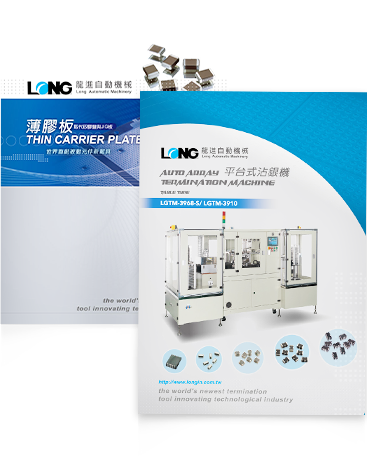
LONG can supply JIG Plate equipment and related consumables, allowing customers to consider a more complete process from chip loading and positioning to termination and downstream handling.
-
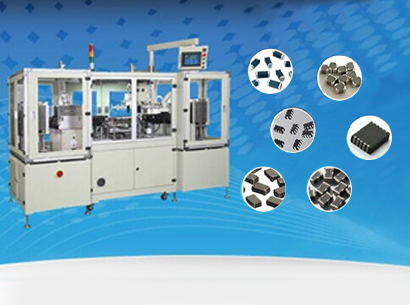
JIG Series Termination Dipping Machines
All of LONG’s termination dipping machine is applicable for TCP and JIG Plate. Customers can discuss suitable equipment based on output, operating method, and existing production-line requirements.
-
Tapping and Tape-Peeling Equipment
LONG offers semi-automatic tapping machines and peeling machines for JIG Plate processes. These machines can help manage downstream chip removal and tape peeling operations.
JIG Plate FAQ
Q1: What is the JIG Plate used for?
The JIG Plate is used for chip holding in termination and related processes. It helps maintain a defined chip layout during loading, taping, dipping, and tape peeling.
Q2: What material is used in the JIG Plate?
The JIG Plate is a fiberglass plate and silicone tape system.
Q3: What is the standard size of the JIG Plate?
The listed standard size is 280 × 180 mm.
Q4: Can LONG customize a JIG Plate?
Yes. Provide chip dimensions, drawings, carrier dimensions, process application, and order quantity. LONG can evaluate a custom JIG Plate configuration.
Q5: When is a JIG Plate a suitable choice?
A JIG Plate is suitable for small-batch production, pilot runs, product development, frequent specification changes, or applications that need lower initial carrier investment.
Q6: What is the difference between a JIG Plate and a TCP Thin Carrier Plate?
A JIG Plate is based on a fiberglass board and tape system, with a focus on flexibility and lower initial investment. A TCP Thin Carrier Plate uses silicone and stainless steel, with a focus on high-density holding, thin construction, termination control, film-thickness consistency, and consumable-cost management potential.
Q7: Does LONG provide JIG Plate-related equipment?
Yes. LONG provides JIG termination machines and peripheral equipment.
Q8: Can distributors or freight forwarders arrange delivery?
Yes. Provide the consignee, destination, purchase order, freight-forwarder contact details, pickup method, and required shipping documents so the order can be coordinated.